Italian at the doctor: registering, booking, describing pain

How the Italian health system works for newcomers, how to register with a family doctor, and the sentences to describe symptoms clearly.

· 3 min read

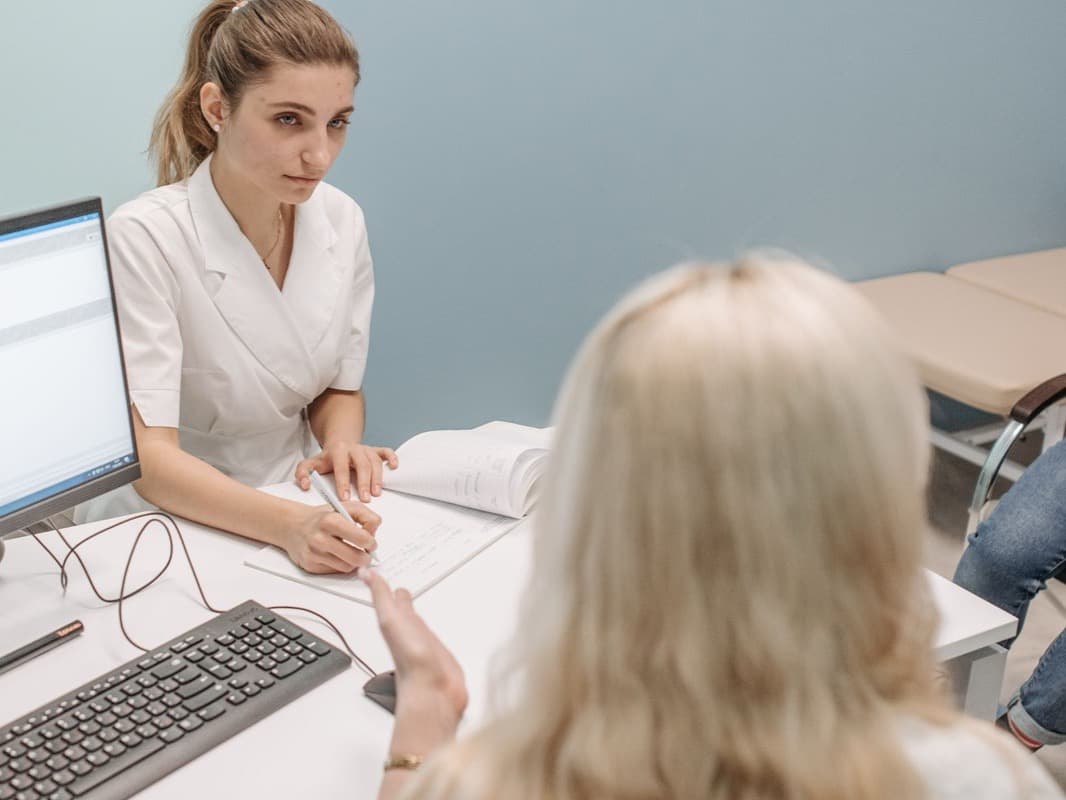
A doctor talking with a patient across a desk in a medical office

Being ill in a language you do not fully speak is stressful. The Italian system is good, mostly free, and very procedural: once you know the three steps (register, book, describe) you will manage every visit. This article gives you the words for each step. Practise them with a tutor before you need them.

How the system works in one paragraph

Italy has a national health service, the SSN (Servizio Sanitario Nazionale), run locally by the ASL (Azienda Sanitaria Locale). Residents register at the ASL office and choose a family doctor, the medico di base (also medico di famiglia). The family doctor is free, sees you for anything, and writes the ricetta (prescription) you need for medicines, specialist visits and tests. Specialists and tests are booked through the CUP (the booking centre) and cost a ticket, a partial fee, unless you are exempt.

Registering with a family doctor

Go to the ASL office of your area with your codice fiscale, ID, permit (if non-EU) and proof of residence. Say:

Buongiorno, vorrei iscrivermi al Servizio Sanitario e scegliere il medico di base. Abito in via Roma 12. Quali medici hanno posti disponibili?

You will receive your tessera sanitaria, the health card that also carries your tax code. Keep it in your wallet: pharmacies and hospitals ask for it every time.

Booking a visit

Family doctors have opening hours (orario di ambulatorio); many see people in order of arrival, others by appointment. Call or use the app they tell you about.

Buongiorno, vorrei prendere un appuntamento con il dottor Ferri. È urgente? Ho la febbre da tre giorni. Va bene domani alle 10, grazie.

For a specialist, the doctor gives you a ricetta and you call the CUP or go to a pharmacy that offers the service: Vorrei prenotare una visita dermatologica con questa ricetta.

Describing symptoms

This is the part people fear most, and it is simpler than it looks: Italian uses ho (I have) plus the symptom, or mi fa male (it hurts) plus the body part.

You want to sayItalian
I have a fever / a cough / a sore throatHo la febbre / la tosse / il mal di gola
I have a headache / stomach ache / back painHo mal di testa / mal di pancia / mal di schiena
My knee hurtsMi fa male il ginocchio
My legs hurtMi fanno male le gambe
I feel dizzy / nauseous / tiredHo le vertigini / la nausea / Mi sento stanco
I am allergic to penicillinSono allergico alla penicillina
I take this medicine every dayPrendo questa medicina ogni giorno
Since when? Since MondayDa quando? Da lunedì

The doctor will ask Da quanto tempo? (for how long?), Dove le fa male? (where does it hurt?), Ha altri sintomi? (other symptoms?) and Prende medicine? (do you take any medicine?).

At the end of the visit

Expect one of these: Le prescrivo un antibiotico (I am prescribing an antibiotic), Le faccio un'impegnativa per gli esami del sangue (a referral for blood tests), Stia a riposo tre giorni (rest for three days), Ha bisogno di un certificato per il lavoro? (do you need a sick note?). For work you will want the certificato di malattia, which the doctor sends online to INPS; you only give the number to your employer.

Emergencies and out of hours

For emergencies call 112 or go to the pronto soccorso (A&E). Say È un'emergenza and give the address. At night and on weekends, the guardia medica (out-of-hours doctor) covers non-urgent problems; the number is on the ASL website.

Before you need it

The best time to learn medical Italian is when you are healthy. Ask your tutor to run a mock visit in the lesson room: five minutes of mi fa male now is worth an hour of stress later.

Frequently asked questions

Is healthcare free in Italy for foreigners?

If you are registered with the national health service (SSN) you get a family doctor for free and pay only a ticket for specialist visits and some tests. EU citizens use the EHIC for temporary stays; non-EU residents register with a permit and, in some cases, a yearly contribution.

How do I find a doctor who speaks English in Italy?

Ask the ASL when you register: they can show which doctors have places, and in big cities some list languages. Private clinics often have English-speaking staff but charge for every visit.

What is a 'ricetta' in Italy?

A prescription. The family doctor issues it; the pharmacy needs it for most medicines and the hospital needs it for specialist visits and tests.

Living in Italian, every Wednesday

One real situation from life in Italy a week: the sentences you need, a practical tip and the podcast episode. Free, in English, one click to leave.

We use your address only for this newsletter. Privacy policy

Ready to say it out loud?

Your first lesson is a real lesson: 50 minutes, one-to-one, online.

Book your first lesson

Not sure of your level? Take the free test

Keep reading