Italian at the pharmacy: what to say and what they will ask

How Italian pharmacies work, the difference between farmacia and parafarmacia, and the phrases to get the right medicine with or without a prescription.

· 3 min read

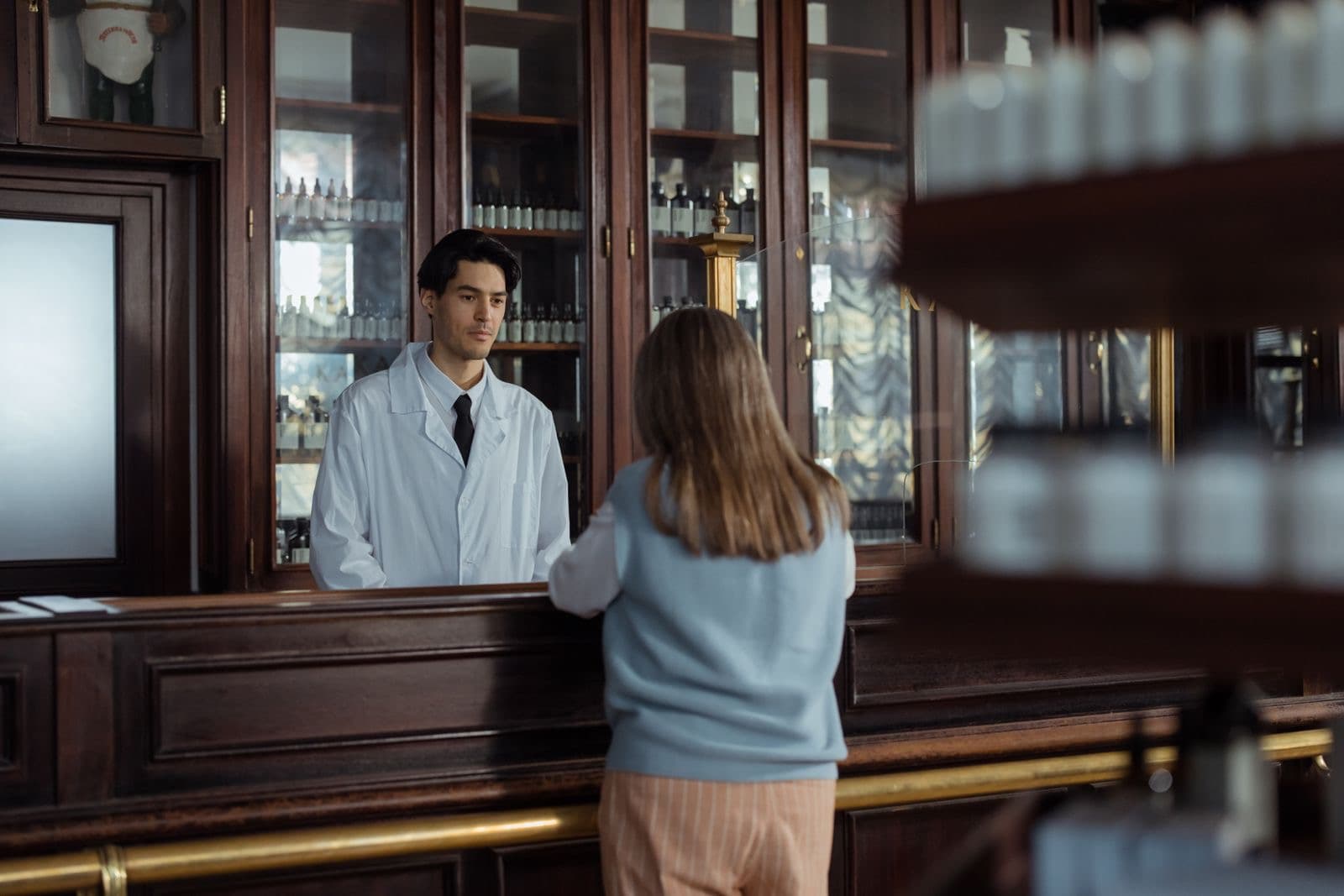
A pharmacist helping a customer at a wooden pharmacy counter

The green cross is the most useful sign in an Italian town. Pharmacists give advice, sell most everyday medicines, book specialist visits for you and often speak some English, but a few Italian sentences get you faster, better help. Here they are, with the questions to expect.

Farmacia or parafarmacia?

A farmacia sells everything: prescription medicines, over-the-counter ones, baby food, cosmetics. A parafarmacia (often inside supermarkets) sells only over-the-counter products, no prescriptions. Both have a pharmacist. Outside opening hours, look for the farmacia di turno: the list is on every pharmacy door.

Asking for something without a prescription

Describe the problem, not the brand: the pharmacist will choose. Start with Avrei bisogno di qualcosa per… (I would need something for…).

Avrei bisogno di qualcosa per il mal di gola. Ha qualcosa per la tosse secca? Mi serve un antidolorifico, tipo ibuprofene. Qualcosa per le punture di zanzara, per favore.

If you want a specific medicine you know from home, say the active ingredient (il principio attivo): most names are similar in Italian (paracetamolo, ibuprofene, loratadina).

With a prescription

Hand over the ricetta (a paper or an electronic code with your health card) and say:

Ho questa ricetta. È la prima volta che prendo questo farmaco.

The pharmacist may ask Vuole il generico? (do you want the generic version?), which is cheaper and identical: Sì, va bene il generico. With the SSN, many prescription medicines cost only a small ticket or nothing.

The questions they ask

They sayIt meansAnswer
Per chi è?Who is it for?Per me / per mio figlio di sei anni
Ha altri sintomi?Other symptoms?Solo la tosse / Anche un po' di febbre
È allergico a qualcosa?Any allergies?No / Sì, alla penicillina
Prende altri farmaci?Do you take other medicines?Sì, la pillola / No
Compresse o sciroppo?Tablets or syrup?Compresse, grazie
Lo ha già preso?Have you taken it before?Sì / No, è la prima volta

Understanding the instructions

The pharmacist tells you how to take it; the foglietto illustrativo (leaflet) repeats it. Listen for: una compressa ogni otto ore (one tablet every eight hours), dopo i pasti (after meals), a stomaco vuoto (on an empty stomach), per cinque giorni (for five days), non più di tre al giorno (no more than three a day). Not sure? Me lo può scrivere? (Can you write it down?) always works.

Other things the pharmacy does

Pharmacies measure blood pressure, book CUP appointments, sell tests and, in many regions, give vaccinations. Useful lines: Posso misurare la pressione? and Posso prenotare una visita con questa ricetta? If the problem sounds serious, they will say Deve andare dal medico: see Italian at the doctor for the next step.

Practise before you sneeze

Health vocabulary is small and repeats endlessly: mal di, ho, mi fa male, ogni, dopo. Ten minutes with a tutor covers it. Book a first lesson and ask for the pharmacy scene; it is one of the most requested at Adesso Italian, and here is how a lesson works.

Frequently asked questions

Can I buy painkillers at the supermarket in Italy?

No. Medicines, even paracetamol and ibuprofen, are sold only in pharmacies and parafarmacie. Supermarkets sell vitamins and plasters at most.

Which pharmacy is open at night in Italy?

Every area has a farmacia di turno, open at night and on holidays on a rota. The list is posted on every pharmacy door and on the local ASL website.

Do Italian pharmacists give medical advice?

Yes, and it is normal to ask. For small problems (a cold, a sting, a headache) the pharmacist is the first stop, not the doctor.

Living in Italian, every Wednesday

One real situation from life in Italy a week: the sentences you need, a practical tip and the podcast episode. Free, in English, one click to leave.

We use your address only for this newsletter. Privacy policy

Ready to say it out loud?

Your first lesson is a real lesson: 50 minutes, one-to-one, online.

Book your first lesson

Not sure of your level? Take the free test

Keep reading