Grocery shopping in Italy: supermarket and market Italian

How the supermarket, the deli counter and the open-air market work in Italy, with the sentences you need to buy exactly what you want.

· 3 min read

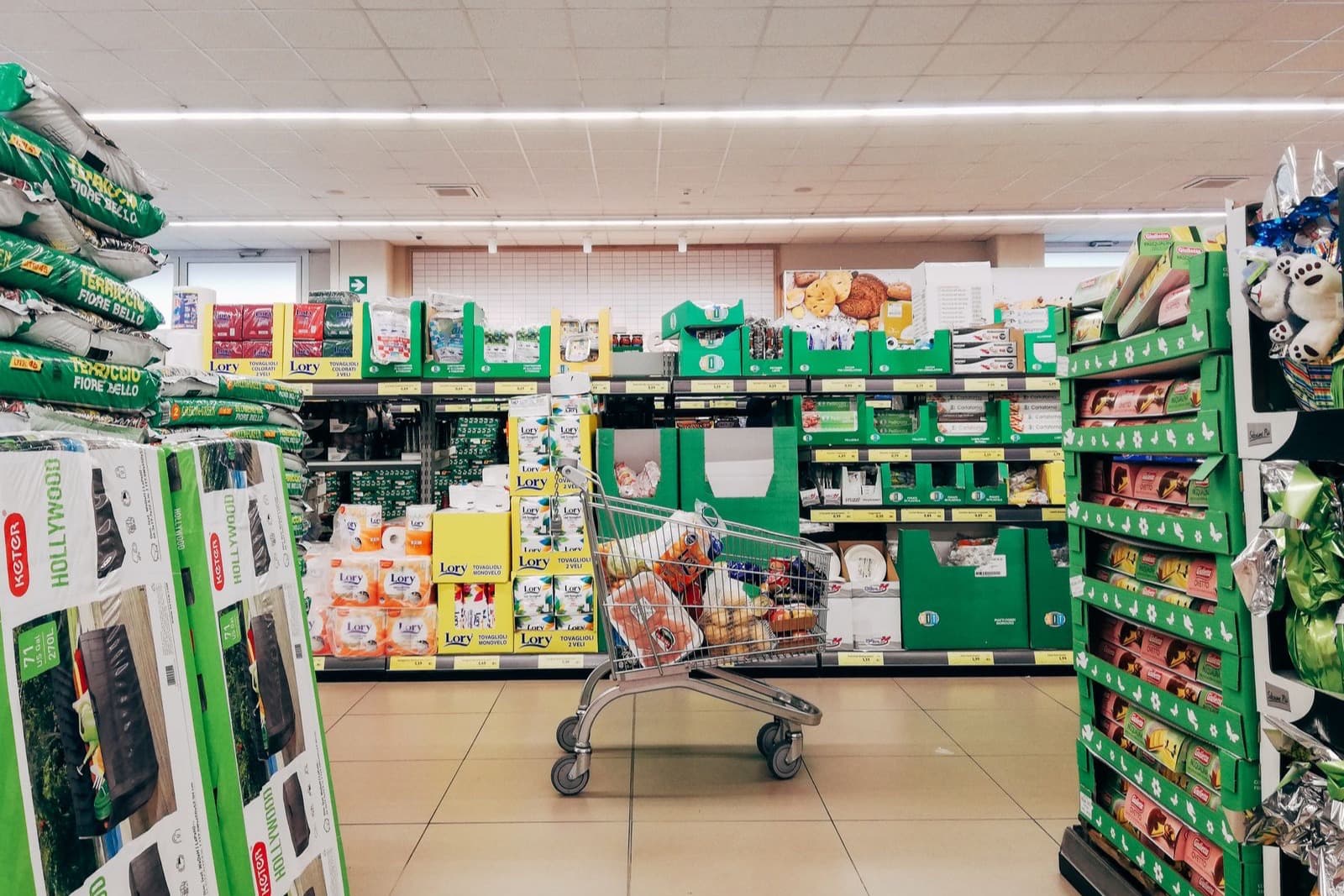
A shopping cart in a supermarket aisle in Padova, Italy

Your first supermarket run in Italy comes with small traps: a coin for the trolley, gloves for the fruit, a counter where people order in etti, and a cashier who asks four questions in three seconds. Here is how it all works, and what to say.

The supermarket, step by step

Trolleys are unlocked with a one-euro coin (or a plastic token). Fruit and vegetables are usually weighed by you: take a glove, put the produce in a bag, weigh it on the bilancia, press the number shown on the shelf and stick the sticker on the bag. No sticker means the cashier sends you back.

Shelf labels show the price per unit and the price per kilo; the offerta tag marks the deal of the week. If you cannot find something:

Scusi, dove trovo il lievito? Avete il latte senza lattosio?

At the checkout

The cashier (cassiera or cassiere) will fire off the same questions to everyone:

They sayIt meansYou answer
Ha la tessera?Do you have the loyalty card?Sì, eccola / No
Vuole una busta?Do you want a bag?Sì, una, grazie (bags cost a few cents)
Carta o contanti?Card or cash?Carta / Contanti
Vuole lo scontrino?Do you want the receipt?Sì, grazie

Bag your own groceries, fast: the next customer is already unloading.

The deli counter

The banco gastronomia is the best part of the shop, and the most intimidating. Take a ticket (prendere il numero), wait for your number on the display, and order by weight in etti (100 g) or by slices.

Due etti di prosciutto crudo, tagliato sottile. Tre fette di mortadella. Un pezzo di parmigiano, circa mezzo chilo.

Sottile is thin, spesso is thick. Va bene così? means "is this amount fine?": say Sì, va bene or Un po' di più.

The open-air market

Every town has one, usually in the morning. Rules are different from the supermarket: you do not touch, you tell the seller what you want and how much, and they choose for you. They also ask when you will eat it: Per oggi o per domani? Answer honestly and you will get perfectly ripe fruit.

Un chilo di pomodori, per favore. Per oggi. Mezzo chilo di pesche, non troppo mature. Quanto viene al chilo?

At the end: Quant'è? (How much is it?) and Basta così, grazie (That is all, thanks).

Words that save you time

  • Scadenza: best-before date. Scade domani means it expires tomorrow.
  • Sfuso: sold loose, by weight.
  • Confezione: pack. Una confezione da sei is a six-pack.
  • Surgelati: frozen food. Latticini: dairy. Salumi: cured meats.
  • Biologico: organic. Senza glutine: gluten free.

Make it a habit

Shopping is the easiest daily practice there is: same shops, same questions, a new word every time. If you want the confidence to chat with the fruttivendolo rather than just point, that is exactly what a lesson built around your week is for. Book your first one and tell your tutor what you cook.

Frequently asked questions

Do I have to weigh fruit and vegetables myself in Italian supermarkets?

In most supermarkets, yes: put on a plastic glove, weigh the bag on the scale, press the product number and stick the label on. At the market the seller does it.

Can I touch the produce at an Italian market?

Usually not. Point and say what you want; the seller picks and bags it. Touching without asking is the classic foreigner mistake.

What does 'etto' mean?

One etto is 100 grams. Deli counters work in etti: due etti di prosciutto is 200 grams.

New articles in your inbox

Two short, practical reads a week. No spam, no selling, unsubscribe in one click.

We only use your address for the blog. See the privacy policy.

Ready to say it out loud?

Your first lesson is a real lesson: 50 minutes, one-to-one, online.

Book your first lesson

Not sure of your level? Take the free test

Keep reading