
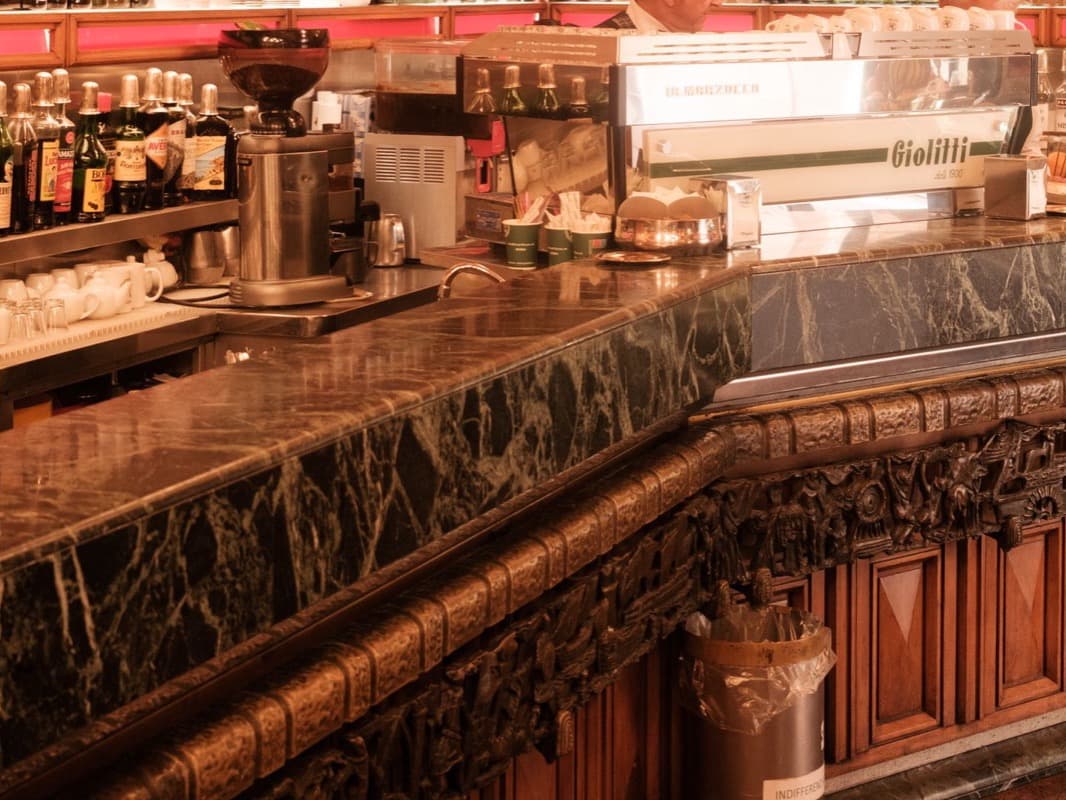
Walk into an Italian bar at eight in the morning and you have about four seconds to order. Here is what to say, what you will get, and how to pay, so the barista does not switch to English before you have finished your sentence.
What "un caffè" really means
In Italy un caffè is an espresso. There is no need to say "espresso" at all. The whole order is three words:
Un caffè, per favore.
Say it to the barista, not to the room, and stand at the counter. (If the r gives you trouble, our tutors hear it every day.) That is the normal way to drink it, in a minute or two, often without sitting down at all.
The coffees you will actually see
| You say | You get |
|---|---|
| Un caffè | A single espresso |
| Un caffè doppio | A double espresso |
| Un macchiato | Espresso with a drop of milk foam |
| Un cappuccino | Espresso with steamed milk, a morning drink |
| Un caffè lungo | Espresso with a little more water |
| Un caffè americano | Espresso topped up with hot water, the closest to filter coffee |
| Un latte macchiato | A glass of hot milk with a shot of coffee |
| Un caffè corretto | Espresso with a splash of grappa or sambuca |
| Un caffè d'orzo | Barley coffee, no caffeine |
| Un decaffeinato | Decaf, often called un deca |
Careful with un latte: in Italy it means a glass of milk. And caffè is always singular in the order: due caffè, never due caffès.
Breakfast at the bar
Breakfast is a coffee and a cornetto (the Italian croissant), eaten standing. The barista will ask Cornetto vuoto o ripieno? (plain or filled?). The fillings: crema (custard), marmellata (jam), cioccolato, pistacchio. The whole breakfast is usually under three euros at the counter.
Un cappuccino e un cornetto alla crema, grazie.
At the counter or at the table
Standing al banco is cheaper and faster. Sitting al tavolo often costs more, and in tourist squares a lot more, because you are paying for the table service and the view. Both are normal: choose on purpose. If you sit, a waiter comes to you; do not order at the counter and then sit down.
Paying without the awkward pause
Two systems exist and every bar uses one of them. In busy city bars you pay first at the cassa (till), get a scontrino (receipt) and put it on the counter with your order. In neighbourhood bars you drink first and pay on the way out. Listen for Paga prima alla cassa (pay at the till first) or just ask:
Pago prima o dopo?
When leaving: Quant'è? (how much is it?) and then Grazie, arrivederci.
Small habits of a regular
- Say buongiorno when you walk in. Always.
- Drink it at the counter, in a minute or two.
- Ask for un bicchiere d'acqua with your coffee; it is free and normal.
- Cappuccino before 11. After lunch, un caffè or un macchiato.
- Say grazie, arrivederci when you leave, even if nobody is looking.
From the bar to the table
Once the bar feels easy, the restaurant is the next step: the same rhythm, more words (our guide to eating out is coming this month). And if you want to say all of this out loud with someone correcting your r in cornetto, book your first lesson: it starts with exactly this kind of morning.